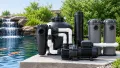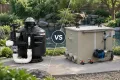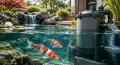
Imagine standing beside your new pond a few weeks after installation. The water was crystal clear on day one, the fish were active and everything felt perfect. Then questions start creeping in. Why is the water turning green so fast? Why does the Pond Filtration System need cleaning again? Is this normal? These are the questions many new pond owners do not think to ask before choosing a filtration setup. At Aquabead, we see this story repeat often. Clear water, healthy fish, and a stable pond ecosystem all depend on selecting the right pond filtration system from the start.
When traditional filters fall short, problems like algae buildup, cloudy water, and constant maintenance follow. Understanding how a complete modern filtration system differs from traditional filters helps you avoid these issues and protects your pond’s long-term health.
Traditional pond filters are typically simple units designed to trap visible debris. These include box filters, sponge filters, and pressurized canister filters commonly used in small garden ponds.
Most traditional filters rely heavily on foam pads or filter mats to catch leaves, sludge and fish waste. While this can improve water clarity temporarily, these filters often struggle with biological filtration and consistent water flow. As debris builds up, flow slows down, oxygen levels drop and frequent cleaning becomes unavoidable. Traditional filters are usually best suited for decorative ponds with minimal fish and low waste production.
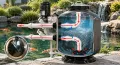
A pond filtration system is a complete, integrated solution designed to manage mechanical waste, biological filtration, and water circulation together. Instead of acting as a single barrier, it works as an ecosystem support system.
A modern filtration system for ponds processes waste evenly, maintains strong water flow, and provides a stable environment for beneficial bacteria. These systems are built to support everything from garden ponds to koi pond filtration systems and large pond filtration system setups with heavy fish loads.
At Aquabead, we view filtration as long term water management rather than short term debris removal.
Let’s take a closer look at each difference so you can see why a complete pond filtration system outperforms traditional filters in maintaining clear water, healthy fish, and a balanced pond ecosystem.
Traditional filters focus on surface trapping. Pond filtration systems focus on continuous processing.
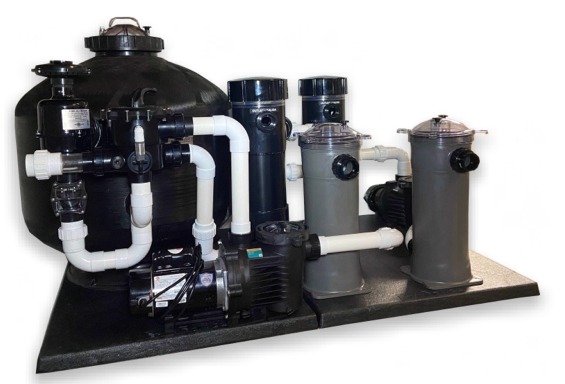
Traditional filters collect debris on sponges that clog quickly and reduce performance. A pond water filtration system like WattMizer PLUS PRO System distributes waste evenly which prevents blockages and maintains consistent flow.
|
Feature |
Traditional Filters |
Pond Filtration System |
|
Waste handling |
Surface trapping |
Even waste distribution |
|
Clogging risk |
High |
Low |
|
Flow consistency |
Drops over time |
Remains stable |
|
Cleaning impact |
Frequent disruption |
Minimal disturbance |
Beneficial bacteria are essential for breaking down ammonia and nitrites produced by fish waste. Traditional filters offer limited surface area for bacterial colonies and frequent cleaning often destroys these bacteria.
A fish pond filtration system provides high surface area media that supports stable bacterial growth. This leads to better nitrogen cycle balance, healthier fish, and clearer water. This is especially important for a koi pond filtration system where waste output is significantly higher.
Flow rate is often overlooked but plays a major role in pond health. Traditional filters lose efficiency as they clog, forcing pumps to work harder and reducing oxygen distribution. A water filtration system for pond environments like our GC TEK designed PondKeeper Water Garden Systems is engineered to maintain high flow without sacrificing filtration quality. Stable circulation improves oxygen levels, prevents stagnant zones and supports overall pond balance.
Maintenance frequency is where many pond owners feel the biggest difference. Traditional filters often require weekly cleaning to remain effective. This disrupts the pond ecosystem and consumes time.
A modern pond filtration system and pond pump is designed for simple maintenance. Cleaning cycles are faster, less messy and do not compromise biological stability. This makes them ideal for fish heavy ponds and duck pond filtration system setups where waste accumulation is constant.
Fish density directly affects filtration needs. Traditional filters struggle to keep up with koi ponds, fish feeding cycles and seasonal waste spikes. A large pond filtration system is built to handle continuous waste production without sudden water quality crashes. This is why fish pond filtration system designs require a more advanced approach.
While traditional filters may appear cheaper upfront, their long term costs often add up. Replacement media, pump strain, increased water changes, and chemical treatments all impact expenses.
A filtration system for ponds is an investment in stability. Reduced maintenance, better pump efficiency, and consistent water quality lead to lower lifetime costs and fewer upgrades.
|
Criteria |
Traditional Filters |
Pond Filter System |
|
Pond size support |
Small ponds |
Small to large ponds |
|
Fish load capacity |
Low |
Medium to heavy |
|
Biological filtration |
Limited |
High |
|
Maintenance frequency |
High |
Low |
|
Flow stability |
Inconsistent |
Consistent |
|
Long term efficiency |
Moderate |
High |
Traditional filters can still be suitable if your pond is small, lightly stocked, and decorative in nature. They work best where water clarity is the primary goal and biological stability is less critical.
You should consider a pond filtration system if you have a koi pond, a fish heavy setup, a duck pond, or a large water feature. Pond owners who want consistent clarity, healthier fish, and reduced maintenance benefit the most from upgrading.
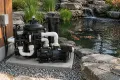
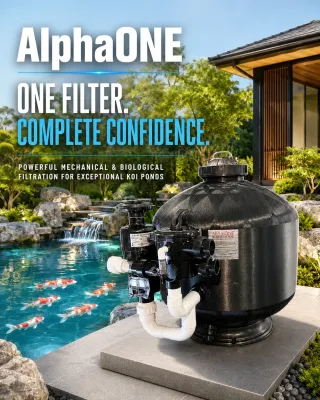
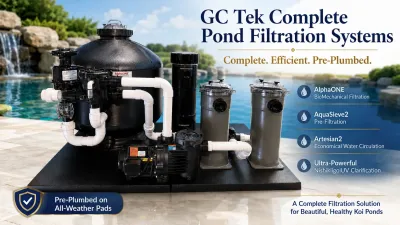
At Aquabead, we offer GC TEK designed complete pond filter systems that combine mechanical, biological, and UV filtration to deliver long lasting results. Our systems use thousands of plastic beads to trap debris while supporting beneficial bacteria for natural water balance.
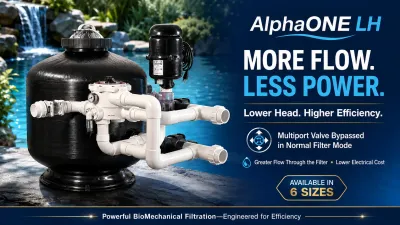
Key features and benefits include an Omnifuser design that directs heavy solids to the filter center for faster cleaning, ALISS technology that keeps beneficial bacteria alive during pump shutdowns and LH Filter Technology that reduces flow restriction for greater energy efficiency.
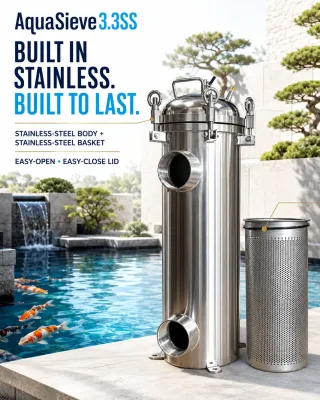
Furthermore, our systems are compact, versatile, simple to maintain, and come pre plumbed on an all weather pad for quick installation. Every system includes a lifetime warranty, reflecting our commitment to quality and reliability. Moreover, all models like the WattMizer PLUS System without AquaSieve2 are available in multiple sizes and gallon ranges, allowing you to choose what fits your pond needs best.
The difference between a traditional filter and a pond filtration system is the difference between temporary clarity and long-term pond health. By choosing a Grand Champion Technologies (GC TEK) system designed to support biological balance, flow efficiency, and waste management, you create a healthier environment for your pond and its inhabitants. Furthermore, you can contact our support team if you need any assistance in choosing the right size of filtration system. Your right filtration system is just a step away.
1. Is a pond filtration system better than a traditional filter?
Yes, a pond filtration system offers better biological support, consistent flow, and long term water quality compared to traditional filters.
2. Can I upgrade from a traditional filter to a pond filtration system?
Most ponds can be upgraded easily by matching system capacity to pond volume and fish load.
3. Do koi ponds require a special filtration system?
Yes, koi pond filtration systems are designed to handle higher waste output and feeding cycles.
4. How do I choose the right pond filtration system size?
System size should be based on pond volume, fish load, and usage type such as koi, fish, or duck ponds.
5. Does a pond filtration system reduce algae?
By improving biological balance and water clarity, a pond filtration system helps reduce algae growth naturally.