Many pond problems begin quietly. Low oxygen, stagnant zones and organic buildup slowly weaken your waterbody until algae blooms, foul odors or fish stress appear. A pond aerator addresses these issues at their source by restoring the oxygen balance and circulation. At Aquabead, we focus on education-first pond care because when you understand how aeration works, you can make smarter decisions for your pond’s long-term health.
From backyard water gardens to farm ponds, the right water aerator for pond environments can dramatically change how your waterbody looks, smells, and supports life.
An aerator is a device that keeps water flowing and adds oxygen to it. It transports oxygen from the air into the water by bubbles, surface agitation or directed flow. This oxygen prevents stagnant areas from developing while supporting fish, plants, and helpful microbes.
Pond aerators come in many forms, including pond aerator pumps, fountain-style units, diffused air systems, and solar pond aerators that rely on renewable energy instead of grid power.
If you want cleaner water, healthier fish and fewer maintenance challenges, pond aeration delivers measurable improvements across your entire waterbody.
For a pond to be healthy, oxygen is essential. Aerator pumps for ponds increase dissolved oxygen levels, promoting the growth of fish, aquatic plants, and microbes. Increased oxygen promotes natural biological processes that maintain water balance and lessen stress on fish.
Ponds create dead zones where waste builds up in the absence of movement. In order to minimize stagnation and distribute oxygen uniformly from top to bottom, pond aerators circulate the whole water column. This is particularly crucial in deeper ponds because oxygen hardly ever naturally reaches lower layers.
Aeration disrupts the calm, nutrient rich conditions algae prefer. By circulating water and increasing oxygen, pond aerators help limit algae blooms naturally and reduce reliance on chemical treatments.
Fish, frogs and beneficial insects all depend on oxygen rich water. A pond aerator pump creates a more hospitable environment, reducing the risk of fish kills and supporting long-term population stability.
Organic waste decomposes more quickly because oxygen fosters the growth of helpful microorganisms. This leads to clearer water, reduced odors and enhanced natural beauty. Many pond owners notice visual improvement within weeks of installing a small pond aerator or full scale system.
Mosquitoes prefer still water. Aeration creates ripples and movement that disrupt breeding, making pond aerators an effective non-chemical mosquito control solution
Aeration helps slow the accumulation of sludge at the bottom of ponds. Over time, this reduces odor-causing gases and improves overall water chemistry.
|
Pond Aerator Type |
How It Works |
Best For |
|
Surface Aerators |
Splash or spray water to add oxygen |
Shallow ponds up to 5 feet |
|
Submersible Aerators |
Use impellers underwater to move and oxygenate water |
Medium-depth ponds |
|
Fountain Aerators |
Combine surface aeration with decorative display |
Aesthetic-focused ponds |
|
Diffused Aeration Systems |
Release fine bubbles from the pond bottom |
Deep ponds over 5 feet |
|
Windmill Aerators |
Use wind energy to circulate water |
Remote or off-grid ponds |
|
Solar Powered Pond Aerators |
Use solar panels to power aeration |
Eco-friendly, sunny locations |
Solar power pond aerator systems are especially useful where electricity access is limited or sustainability is a priority.
|
Feature |
With Pond Aerator |
Without Pond Aerator |
|
Oxygen Levels |
Stable and consistent |
Low and fluctuating |
|
Algae Growth |
Naturally reduced |
Frequent blooms |
|
Fish Health |
Strong and resilient |
High stress, fish loss risk |
|
Odor Control |
Minimal odors |
Strong sulfur smells |
|
Water Clarity |
Clearer water |
Murky appearance |
The accessories required depend on the system type and pond layout.
At Aquabead, we emphasize planning ahead so your setup matches your pond’s exact needs.
Installing a pond aerator typically involves positioning the unit correctly and connecting it to a power source which may be electric or solar power aerators for ponds.
Maintenance includes regular debris removal, inspecting pumps and airlines and checking for wear. Keeping pond aerator pumps clean ensures consistent performance and extends system life.
Pond depth is the most important factor. Shallow ponds of 5 feet or less benefit from surface aerators or fountain units. Deeper ponds require diffused systems to move oxygen from bottom to top. Pond pumps for small ponds may not provide enough circulation for larger or deeper waterbodies while pond pumps with filter systems support overall clarity alongside aeration. Solar powered pond aerator options work best in sunny locations and are ideal for reducing energy costs.
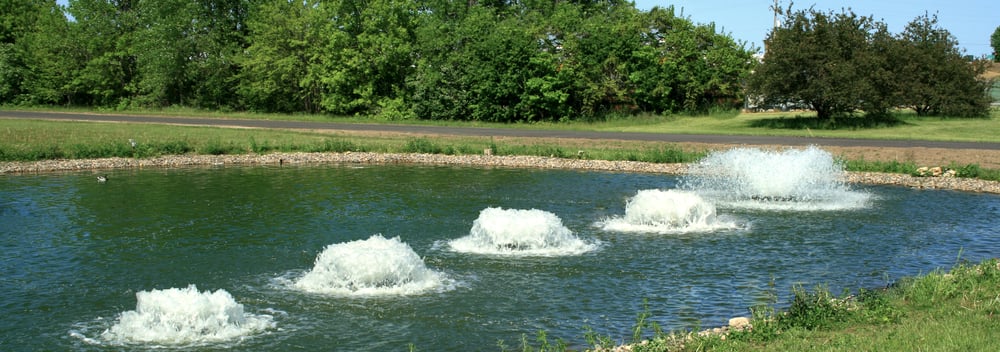
A pond aerator is not an optional upgrade. It is a foundational tool for maintaining water quality, protecting aquatic life and preserving the beauty of your pond. Aeration promotes a balanced ecology that works with nature rather than against it, regardless of whether you pick a pond aerator solar or electric systems. At Aquabead, we believe informed pond owners create healthier waterbodies, and aeration is one of the smartest steps you can take for your pond and your peace of mind.
1. What does a pond aerator do?
An aerator increases oxygen and circulates water to improve overall pond health.
2. How long should a pond aerator run each day?
Many diffused systems are designed to run continuously but some owners use timers depending on climate and pond load.
3. Can a pond aerator help with algae?
Yes. Aeration reduces conditions that promote algae growth.
4. Is an aerator safe for fish?
Yes. It improves fish health by maintaining stable oxygen levels.
5. Do small ponds need aeration?
Yes. A small pond aerator can prevent stagnation and odor even in compact waterbodies.
6. Are solar pond aerators effective?
Solar pond aerators are effective when properly sized and placed in areas with consistent sunlight.
7. What is the difference between pond aerators and pond pumps?
Pond aerators focus on oxygenation and circulation, while pond pumps move water for filtration or features. Many ponds benefit from both.