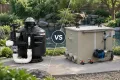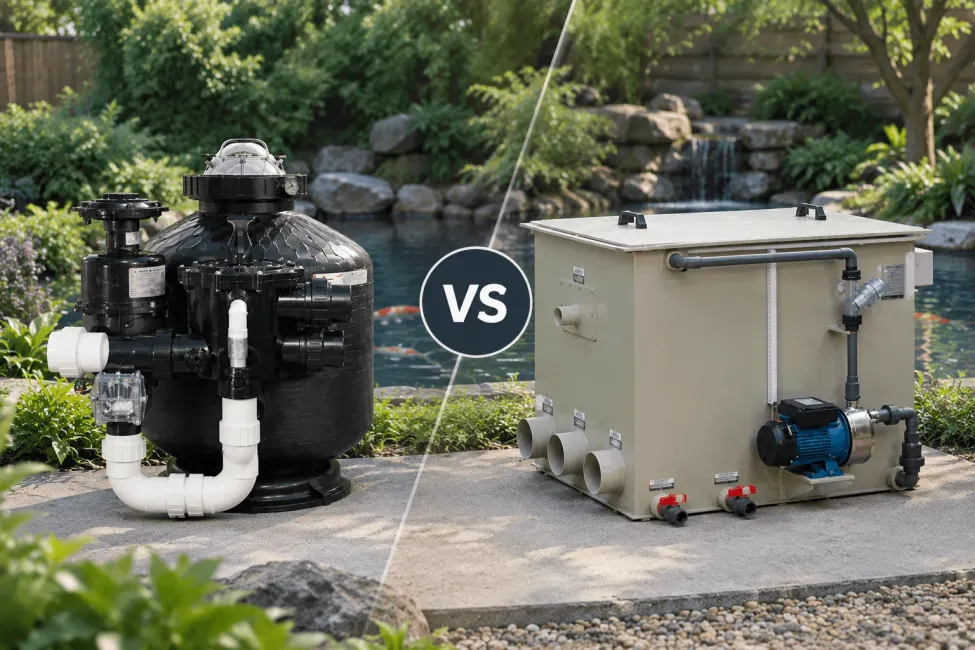
Neither approach automatically delivers better results in every pond. The right choice depends on fish biomass, feeding intensity, target flow rate, plumbing layout, available space, and the amount of maintenance you want to manage. This comparison examines the technical and financial trade-offs, including how AquaBead’s AlphaONE, AlphaNANO, and NishikigoiRDF systems fit into different filtration strategies.
Mechanical filtration performance depends on the size and quantity of particles a system captures, how quickly it removes them, and how consistently it maintains flow. Fish waste, uneaten food, algae, and other organic debris can increase the solids load, particularly in heavily stocked ponds with intensive feeding schedules. A bead filter traps particles within its media bed. As waste accumulates, the media can restrict water movement and increase resistance. Regular backwashing removes captured debris and helps restore performance. However, the filter’s results depend on media characteristics, internal flow distribution, maintenance, and correct sizing.
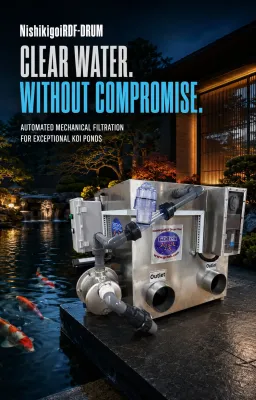
A rotary drum filter uses a fine screen to separate suspended particles from the water stream. AquaBead’s NishikigoiRDF range uses 75-micron mesh, including 316 stainless steel screens on its listed models. The drum’s automatic cleaning cycle removes accumulated waste from the screen and sends it to a drain. This approach removes fine solids before they enter downstream filtration equipment.
That difference matters when a pond produces a high volume of waste. An RDF can reduce the solids reaching a biological filter, while a bead filter handles mechanical capture and biological support in one vessel. Still, a 75-micron screen cannot remove every dissolved contaminant or all finer particles. Water clarity also depends on circulation, biological filtration, dissolved organics, and the overall condition of the pond.
For a moderately stocked pond, a correctly sized bead filter may provide sufficient solids removal without adding another filtration stage. For a high-load koi pond, an RDF may offer better control over fine suspended waste before it reaches the biological stage. The key performance measure is not simply whether the water looks clear. Owners should also monitor ammonia, nitrite, dissolved oxygen, flow rate, and the filter’s behavior under normal feeding conditions. These measurements provide a more reliable picture of filtration performance than visual clarity alone.
Hydraulic performance often determines the real cost of operating a pond filtration system. A pump must move enough water through the filter, pipework, bends, valves, and elevation changes to meet the pond’s circulation requirements. Every restriction adds resistance, which can reduce actual flow or force the pump to work harder.
A bead filter creates resistance as water passes through its media. When debris accumulates, the pressure difference across the filter can increase and flow can fall. Backwashing helps remove trapped waste, but owners should not rely on a pump’s advertised maximum flow rate when sizing the system. Instead, compare the pump’s performance curve with the total system head. Include the filter, pipe diameter, fittings, valves, UV equipment, and return height. A pump that delivers high flow under low resistance may deliver substantially less flow once the complete system enters operation.
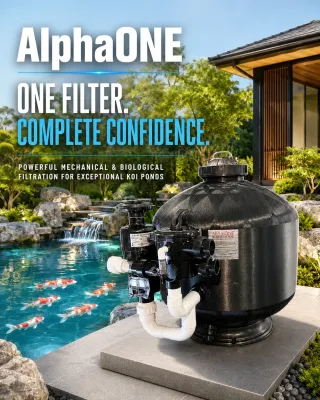
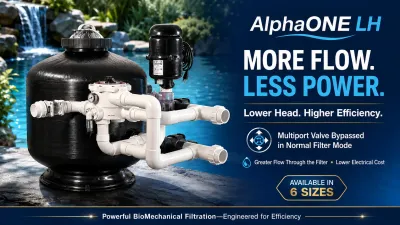
AquaBead’s AlphaONE filter range lists different flow rates and pond capacities across its models. For example, the manufacturer lists the AlphaONE 4.25 at 90 gallons per minute and the AlphaONE 6.0 at 120 gallons per minute. These specifications help with initial planning, but they do not replace a complete hydraulic calculation for the installed system.
An RDF’s screen resistance changes as solids collect on the mesh. The automatic cleaning cycle rinses the screen and helps restore water passage. However, the installation still needs suitable inlet and outlet sizes, adequate water levels, and a flow rate within the model’s operating limits. Consider the NishikigoiRDF NGRDF30SS. AquaBead lists a pump-fed flow rate of 7,950 gallons per hour and a gravity-fed flow range of 6,000 to 8,000 gallons per hour. Those figures describe different installation configurations, so buyers should choose the appropriate rating for their plumbing design.
Use the actual operating flow and total dynamic head when comparing pumps. Then check whether each filter maintains the required flow during normal operation and as it collects waste. A variable-speed pump may help reduce electricity use when the system can meet its filtration needs at a lower flow setting, but owners must not reduce circulation below the level their fish and filtration system require.
The most efficient system is not necessarily the one with the lowest-rated motor. It is the one that delivers the required flow at the lowest practical energy cost while maintaining safe water quality.
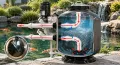
Mechanical filtration and biological filtration solve different problems. Mechanical filtration removes physical particles, while beneficial bacteria convert toxic ammonia into nitrite and then nitrate. A reliable pond system must manage both processes, regardless of which mechanical filter the owner selects. A bead filter supports both processes within its media bed. This arrangement can simplify system design and reduce the need for separate equipment. However, when solids accumulate within the media, they can interfere with water movement and increase the organic load inside the filter. Proper backwashing helps remove that waste, while adequate oxygen and circulation support biological activity.
A rotary drum filter takes a different approach. It removes suspended solids before they enter the biological stage. This separation can reduce the amount of organic debris that accumulates in downstream media and allow beneficial bacteria to focus more on dissolved waste processing. AquaBead specifically recommends using its NishikigoiRDF filters with AlphaONE or AlphaNANO bio-mechanical filters. This combination separates fine-solids removal from downstream filtration rather than asking one vessel to manage the entire load.
However, an RDF does not replace biological filtration. Owners still need enough biological capacity for their fish load, feeding rate, and water temperature. They should also monitor ammonia and nitrite after installation, particularly when they change the filtration layout or clean established biological media. Changes in equipment do not remove the need to protect the pond’s biological balance.
Maintenance affects labor, water consumption, and filtration consistency. The two systems use different cleaning methods, so buyers should compare how each method fits their daily routine.
A bead filter typically requires the owner to initiate a backwashing sequence according to the manufacturer’s instructions. The process loosens trapped waste and flushes it out through a waste line. The owner then returns the filter to normal operation. The required frequency varies with feeding intensity, fish biomass, debris entering the pond, and filter capacity. A heavily stocked koi pond may need more frequent cleaning than a lightly stocked ornamental pond. Owners should watch for falling return flow, rising pressure where gauges apply, and other signs of accumulated debris.
AquaBead provides filter manuals and maintenance guides for its systems, including AlphaONE and NishikigoiRDF equipment. Following the specific model’s instructions helps owners maintain the equipment correctly and avoid unnecessary cleaning or incorrect valve operation.
An RDF uses a control system to trigger screen cleaning when the water level or sensor conditions indicate that the screen needs rinsing. A spray system washes the captured debris into a waste outlet, allowing the screen to return to service. This automation can reduce routine hands-on cleaning, especially when the pond produces substantial amounts of suspended waste. However, owners still need to inspect the screen, spray nozzles, sensors, motor, cleaning pump, and drain. Blocked nozzles, poor water supply, sensor problems, or a restricted waste line can interfere with cleaning.
An RDF therefore changes the type of maintenance rather than eliminating it. The owner trades some scheduled manual cleaning for monitoring and servicing a more complex mechanical system.
The answer depends on the pond and the owner's definition of maintenance. A bead filter may offer a simpler equipment layout, while an RDF can reduce the frequency of manual solids removal. A combined RDF and biological-filter setup may reduce solids buildup in downstream equipment, but it also adds components that require inspection.
Before choosing, consider how much time you spend cleaning, how easily you can access the equipment, and whether you can respond quickly to an automatic cleaning fault.
Purchase price alone does not show which system offers better value. A fair comparison includes the filter, pump, additional biological equipment, installation, electricity, cleaning water, replacement parts, and routine servicing.
The pump usually accounts for a substantial share of a pond’s filtration energy use because it may run continuously. An RDF also uses electricity for its drum motor and cleaning pump. Actual consumption depends on the motor ratings, operating hours, cleaning frequency, and the rest of the filtration system. AquaBead lists the NishikigoiRDF NGRDF30SS with a 40-watt drum motor and a 120-watt backwash pump. These ratings help estimate consumption, but they do not mean both components run continuously at full power. The cleaning pump generally runs during cleaning cycles, so its actual contribution depends on how often and how long those cycles operate.
For a practical comparison, calculate the continuous pump consumption first. Then add the RDF motor and cleaning pump based on their actual operating patterns. Use your electricity tariff to calculate the annual cost in your local currency. Do not assume that a bead filter always consumes less electricity or that an RDF always costs more to operate. Pump selection, hydraulic resistance, required flow, and cleaning frequency can change the outcome.
Bead filter backwashing sends water and captured debris to a drain. An RDF also uses water to rinse the screen and remove accumulated solids. The amount each system consumes depends on the cleaning cycle, water pressure, waste load, and operating schedule. An RDF may use short, repeated cleaning cycles, while a bead filter may use larger amounts of water during less frequent backwashing. Neither pattern guarantees lower total consumption. Owners should measure the water used during typical operation if water costs or supply limits matter.
Waste disposal also deserves attention. Both systems need a suitable drainage route, and local restrictions may affect how owners dispose of pond waste. Poor drainage can create maintenance problems even when the filter itself operates correctly.
A bead filter requires attention to valves, seals, media condition, pumps, and associated plumbing. An RDF adds a fine screen, sensors, a drum motor, a cleaning pump, and automatic controls. Both systems need routine inspection, and both can incur repair costs if owners neglect maintenance. Installation can also change the total investment. An RDF often requires careful inlet and outlet planning, suitable water levels, drainage, and a separate biological stage. A bead filter can provide a more compact arrangement when one vessel meets the pond’s mechanical and biological needs.
To compare long-term value, estimate the total cost over a chosen period, such as five years:
Initial equipment and installation
Electricity for the pump and filter
Water used for cleaning
Routine servicing and replacement parts
Any additional biological filtration
Costs associated with downtime or corrective maintenance
This approach gives buyers a more realistic comparison than purchase price alone.
A combined system can suit koi ponds that generate a heavy solids load and need substantial biological filtration. The RDF captures fine suspended waste first, and the bead filter provides downstream filtration. This arrangement can reduce the solids entering the media bed and help separate mechanical cleaning from biological processing. The setup may prove particularly useful for ponds with high fish biomass, intensive feeding, or a strong emphasis on automated solids removal. However, it adds equipment cost, plumbing complexity, and more maintenance points. Owners must also confirm that the RDF, biological filter, and pump can work together at the intended flow rate.
AquaBead's NishikigoiRDF drum filters are designed to work with its AlphaONE and AlphaNANO filters. This provides a product pathway for pond owners considering separate mechanical and biological stages. The exact configuration should depend on the pond's needs and the specifications of the chosen models.
For a smaller pond with moderate fish loads, a combined setup may add complexity without enough practical benefit. In that situation, a suitably sized bead filter and an appropriately selected pond pump may provide a more straightforward solution.
Use the following factors to guide your decision.
Choose a bead filter when:
You want mechanical and biological filtration in one vessel.
Your pond has a moderate solids load and a manageable backwashing routine.
You prefer a relatively straightforward equipment layout.
Your available space or budget limits the number of filtration components.
Consider a rotary drum filter when:
Fine-solids removal is a major priority.
Your pond produces substantial waste because of heavy stocking or feeding.
You want automatic screen cleaning to reduce routine manual solids removal.
You can accommodate the installation, drainage, and separate biological filtration requirements.
Consider a combined system when:
Your koi pond requires high-capacity filtration.
You want to remove fine solids before water reaches biological media.
You have space and budget for additional equipment.
You can maintain both the automatic cleaning system and the downstream filter.
These guidelines do not replace proper sizing. Pond volume alone cannot determine the ideal filter. Fish biomass, feeding rate, circulation, waste load, and the manufacturer's recommended limits all matter. When in doubt, ask a pond filtration professional to review the complete design.
AquaBead offers several filtration options that suit different system designs. The most useful comparison focuses on each product's role rather than treating all filters as direct substitutes.
AlphaONE Filters: The AlphaONE range supports mechanical and biological filtration within one vessel. The manufacturer lists multiple sizes, so buyers can compare media capacity, flow specifications, and stated pond capacities.
AlphaNANO Filters: AlphaNANO provides another bio-mechanical filtration option. It may fit a design that needs downstream filtration alongside an RDF, depending on the model and the pond's requirements.
NishikigoiRDF Drum Filters: The NishikigoiRDF range focuses on automatic removal of suspended solids through fine mesh. The manufacturer lists different sizes and flow specifications for different installation needs.
Pond Pumps: Pump selection affects flow, hydraulic performance, and energy use. Buyers should match the pump to the entire filtration circuit rather than choosing it from a maximum flow figure alone.
For example, AquaBead lists the NishikigoiRDF NGRDF10SS for ponds up to 5,500 gallons and the NGRDF30SS for ponds up to 16,000 gallons. These are manufacturer-stated maximum pond sizes, not universal recommendations for every stocking level. Confirm actual flow requirements and installation specifications before choosing a model.
A bead filter and a rotary drum filter serve different roles, so the better option depends on the pond's priorities. A bead filter offers combined mechanical and biological filtration in a compact arrangement. An RDF prioritizes automated fine-solids removal and can work particularly well ahead of a separate biological filter. For pond owners who value a straightforward system, a correctly sized bead filter may offer the best balance of cost and functionality. For heavily stocked koi ponds that produce substantial waste, an RDF can provide stronger separation between solids removal and biological processing. A combined system may offer further advantages when the pond needs both capabilities and can justify the extra investment.
Before making a decision, compare the complete system's flow, energy demand, cleaning water, maintenance requirements, and biological capacity. AquaBead's AlphaONE, AlphaNANO, NishikigoiRDF, and pond pump ranges provide options for different filtration strategies. The best results come from matching the equipment to the pond, checking water quality regularly, and following the manufacturer's maintenance instructions.
An RDF automates screen cleaning, but it does not eliminate maintenance throughout the filtration system. A downstream bead filter may still need backwashing, and owners must inspect the RDF’s screen, sensors, spray nozzles, motor, and waste outlet.
2. Will a bead filter provide enough filtration for a heavily stocked koi pond?It can, if the model and the complete system match the pond’s fish load, feeding rate, flow requirements, and biological demand. Heavy stocking may justify a separate prefilter to reduce the solids entering the bead filter.
3. Can an RDF reduce the operating cost of a pond?It may reduce some manual cleaning and solids buildup in downstream equipment, but it also adds power consumption, water use, and components that require servicing. Calculate the complete system’s costs before assuming it will save money.
4. Which filter provides better water clarity?An RDF can remove suspended solids through its fine mesh before water reaches downstream filtration. A bead filter also traps particles, but debris buildup can affect its flow and cleaning needs. Actual clarity depends on the whole filtration setup, circulation, and pond conditions.
5. What should I compare before purchasing a filter?Compare the model's flow specifications, installation type, stated pond capacity, maintenance requirements, pump needs, biological filtration capacity, warranty, and replacement-part availability. Also estimate electricity, cleaning water, and servicing costs.