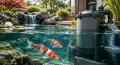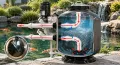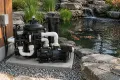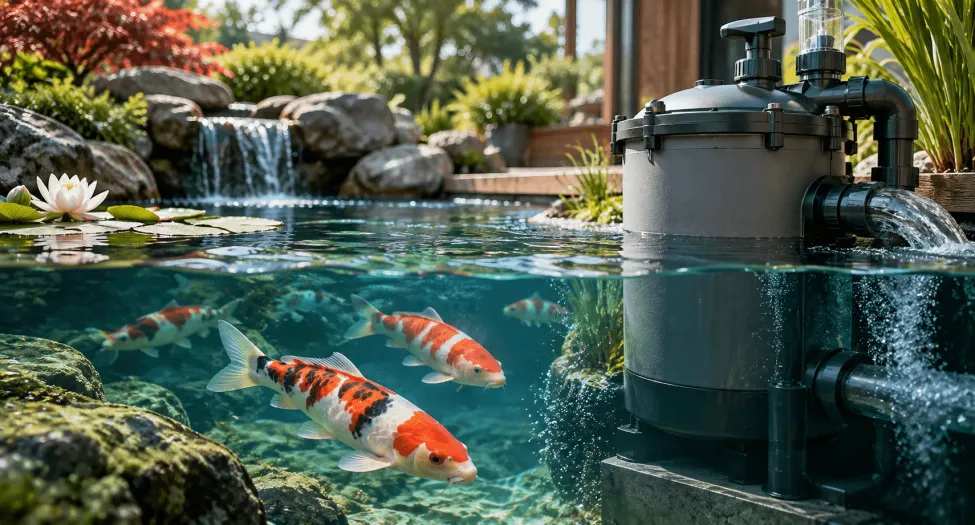
A koi pond filter can be running every day and still leave the water cloudy, full of fine particles, or difficult to maintain. When this happens, pond owners often assume the filter is simply too small. Filter capacity matters, but it is only one part of the filtration system. The problem may actually be inadequate water flow, an incorrectly matched pump, excessive fish load, accumulated waste, poor prefiltration, ineffective biological filtration, or water that needs an additional polishing or clarification stage. A good koi pond filtration system depends on all of these components working together.
This is especially important when troubleshooting a GC Tek filter or planning a complete GC Tek pond filtration setup. Instead of immediately replacing the main filter, it is worth identifying where the filtration process is breaking down.
A filter cannot clean water that does not pass through it. One of the first things to check when pond water remains cloudy is the actual flow reaching the filter. Pond pumps are normally rated under specific operating conditions. Once installed, the actual flow can be reduced by pipe length, pipe diameter, elevation changes, valves, elbows, UV equipment and resistance through the filtration system. A pump that appears powerful enough on paper may therefore deliver considerably less flow in the finished pond. This is why the pond filter pump and filter should be treated as one system rather than two separate purchases. If circulation is too slow, suspended waste remains in the pond longer and less water receives mechanical and biological treatment.
When troubleshooting, look beyond the advertised GPH of the pump. Consider how much water is actually moving through the filtration system after plumbing resistance and head pressure are accounted for.
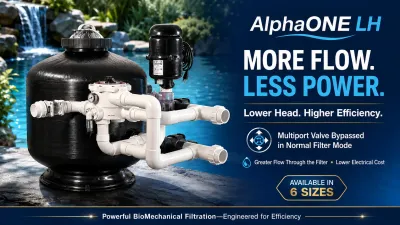
Installing a larger pump does not automatically improve filtration. The pump must operate within a flow range that the filter and plumbing can handle effectively. An undersized pump may fail to circulate enough pond water. An excessively powerful pump can create its own problems if the rest of the system cannot accommodate the flow. This is particularly important when designing pond pumps with filter systems, because pump selection affects filtration performance throughout the entire circulation loop. The objective is not simply to move the greatest possible amount of water. The objective is to maintain sufficient turnover while allowing the mechanical and biological stages to work effectively.
For GC Tek equipment, pond owners should consider the recommended flow capacity of the selected filter alongside pump performance, plumbing size, pond volume and the amount of resistance elsewhere in the system.
Two 5,000-gallon ponds can have completely different filtration requirements. A lightly stocked ornamental pond may place relatively little demand on its filtration. A 5,000-gallon koi pond containing numerous large fish and receiving heavy feeding can produce substantially more solid and dissolved waste. That is why selecting a koi pond filter only according to pond gallons can be misleading. Fish produce waste continuously, while uneaten food and other organic material also enter the system. As koi grow, the biological load can increase even though the pond volume remains unchanged. A filtration setup that performed well several years ago can therefore become less effective as the fish population matures.
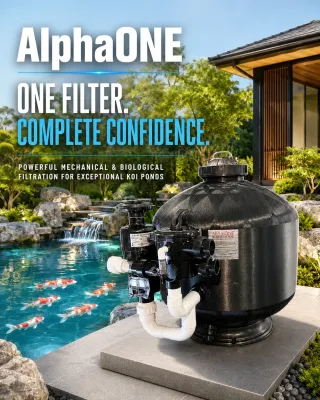
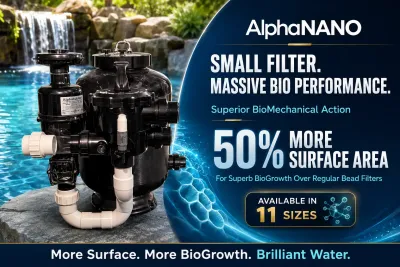
GC Tek filtration systems such as the AlphaONE line are particularly relevant here because filter selection can be considered in relation to both pond capacity and fish load rather than treating pond volume as the only sizing factor. If water quality has gradually become harder to maintain without a major equipment change, increasing fish biomass is one of the factors worth checking.
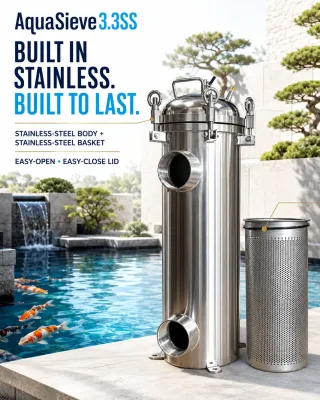
A main filter should not necessarily be expected to handle every leaf, piece of algae, heavy solid and fine particle entering the circulation system. This is where prefiltration becomes important. A prefilter removes larger solids before they reach downstream equipment. In a GC Tek pond system, equipment such as the AquaSieve can be used as part of this earlier stage of waste removal. This can reduce the amount of debris reaching the main filtration chamber and help prevent the entire pond filtration system from becoming overloaded with material that could have been removed earlier.
Think of the filtration train as a sequence. Larger waste should ideally be removed early, finer material can then be captured mechanically, and biological filtration can focus on processing dissolved waste. When all of these jobs are pushed onto one component, maintenance requirements can increase and overall performance may suffer.
A filter that captures waste eventually has to release that waste from the system. As debris accumulates, resistance through the filter can increase and water flow can decline. The pond owner may still see water moving and assume that the pond filter system is operating normally, even though its effective performance has changed. For a backwashable GC Tek filter, the maintenance schedule should reflect the actual pond conditions rather than an arbitrary calendar interval. Heavily stocked koi ponds, periods of heavy feeding and seasonal debris can all increase the amount of material entering the filter. Watch for changes in water flow, pressure and water clarity. These can provide useful clues that accumulated material needs to be removed. Backwashing should also be viewed as waste export. Capturing solids is only the first half of mechanical filtration; those solids eventually need to leave the pond system.
Clear water and healthy water are related, but they are not the same thing. Mechanical filtration primarily deals with physical material suspended in the water. Biological filtration relies on beneficial microorganisms that process nitrogenous waste generated by fish and decomposing organic matter. A koi pond filtration system therefore has to perform both jobs. Problems can arise when a pond experiences a rapid increase in fish load, feeding, organic waste or other changes that increase biological demand. A newly established filtration system may also require time for its biological population to become established.
This distinction matters when diagnosing a GC Tek filtration system. If the mechanical stage appears to be removing visible debris but water-quality parameters remain problematic, simply increasing mechanical filtration may not address the underlying issue. The filtration system should be evaluated as a combination of waste capture, biological processing and circulation rather than judged solely by how transparent the water appears.
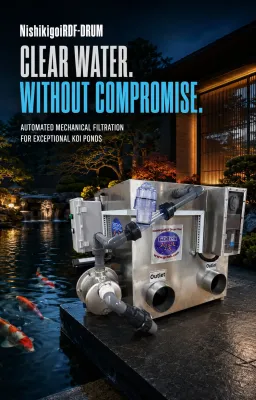
Sometimes the filtration system is functioning correctly and the pond still does not have the polished appearance the owner expects. Very fine suspended particles can remain in circulation even after larger debris has been removed. These particles may be small individually but collectively give the pond a hazy or dull appearance. This is where additional polishing filtration can become useful. GC Tek offers filtration equipment intended for different stages of pond-water treatment. A polishing stage can complement the main filter when the objective is to capture finer material rather than simply increasing the size of the primary filter. This is an important distinction. If the existing filter is appropriately sized and functioning properly, replacing it with a larger unit may not solve a fine-particle problem. The filtration process may instead need another stage designed for finer solids.
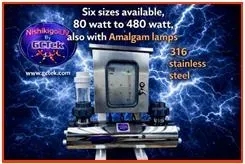
Not every green or cloudy pond is evidence of a failing filter. Suspended algae can dramatically reduce water clarity even when the mechanical filtration system is operating. In this situation, the koi pond filter and pump may only be part of the solution. UV clarification can be incorporated into a pond system to address suspended algae. GC Tek's broader pond equipment range includes NishikigoiUV clarifiers that can work alongside mechanical and biological filtration. Correct sizing and flow remain important here as well. Adding UV equipment without considering the pond volume and water flow through the unit can produce disappointing results.
The appearance of the water can help with initial diagnosis. Water filled with visible debris, water containing very fine suspended material and green water caused by algae are different problems and may require different parts of the filtration system to be examined.
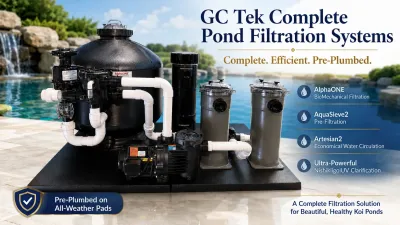
One of the biggest mistakes in pond troubleshooting is looking at each component independently. The bottom drain or intake collects water and waste. Prefiltration removes larger solids. The pump moves water through the system. Mechanical filtration captures suspended material. Biological filtration processes dissolved fish waste. UV can help control suspended algae, while polishing filtration may address finer particles before water returns to the pond. A weakness anywhere in that chain can affect the final result. This is one reason complete pond filter systems can be useful for koi ponds. Properly matched components reduce the risk of installing an excellent filter behind an unsuitable pump, restrictive plumbing or inadequate prefiltration.
GC Tek offers equipment across multiple stages of this process, including Rhino bottom drains, AquaSieve prefilters, AlphaONE filtration, pumps, UV clarification and other pond-filtration components. When troubleshooting a GC Tech pond filter search or an existing GC Tek setup, it is therefore more useful to evaluate the complete water path than to focus only on the filter vessel.
If your GC Tek filtration setup is no longer producing the water clarity you expect, start with the basics before replacing equipment. Confirm the pond volume and current fish load. Then check the actual pump flow and look for restrictions in the plumbing. Inspect the prefilter and main filter for accumulated debris, confirm that backwashing and routine maintenance are being performed correctly, and determine whether the problem is large solids, fine suspended particles, green water or a water-quality issue. That diagnosis matters because each problem points toward a different solution. A flow problem may require changes to the pump or plumbing. Excessive solids may indicate a need for better prefiltration. Fine particles may require polishing. Green water may point toward UV clarification. A heavily stocked koi pond may require greater mechanical and biological capacity.
The goal should be to correct the weak point rather than simply adding more equipment.
When choosing a new koi pond filter system, start with pond volume, but do not stop there. Fish quantity and size, feeding levels, desired turnover, pump performance, plumbing, bottom drains, prefiltration and maintenance expectations should all influence the final configuration. This becomes particularly important with larger koi ponds because small system-design problems become more noticeable as flow rates and fish loads increase.
A well-designed filtration system for ponds should also be practical to maintain. Equipment that performs well but is difficult to clean can become less effective if routine maintenance is postponed. Accessibility, backwashing, waste discharge and component placement therefore deserve consideration during the design stage, not after installation. For pond owners considering GC Tek equipment, looking at the filtration system as a complete chain makes it easier to select compatible components rather than treating the pump, filter, prefilter and UV as unrelated products.
If a pond filter is running but the water remains cloudy, replacing the filter should not automatically be the first response. Poor circulation, pump mismatch, heavy fish loads, accumulated solids, insufficient prefiltration, biological demand, fine suspended particles and algae can all produce similar symptoms. The best approach is to determine what is making the water unclear and where the filtration process is failing. For GC Tek systems, this means looking beyond the main filter and evaluating how the intake, prefiltration, pump, mechanical and biological filtration, UV and final water return work together. Correcting the actual bottleneck can often produce better results than simply installing a larger filter.
1. Is a GC Tek filter suitable for a koi pond?
GC Tek filtration equipment includes options designed for koi and ornamental pond applications. The appropriate setup depends on pond volume, fish load, required flow and the other components used in the filtration system.
2. Why is my GC Tek filter running but my pond water is still cloudy?
The filter itself may not be the only cause. Check pump flow, plumbing restrictions, fish load, prefiltration, maintenance, fine suspended solids and algae. Identifying the type of cloudiness helps determine which part of the system needs attention.
3. How do I choose the right GC Tech pond filter?
Start with pond volume and then consider koi size and quantity, feeding levels, desired turnover, pump flow and prefiltration. A filter should be selected as part of the complete pond system rather than by gallon capacity alone.
4. Does a koi pond filter need a separate pond pump?
Water must be circulated through the filtration system, so pump selection is a critical part of the setup. The pond filter pump should provide suitable flow after head pressure and plumbing resistance are considered.
5. Are pond pumps with filters better than choosing components separately?
Either approach can work when the components are properly matched. A complete system can simplify equipment matching, while individually selected components provide greater flexibility for custom pond designs.
6. Can a pond filter be correctly sized and still give cloudy water?
Yes. Filter size is only one factor. Insufficient flow, excessive solids, algae, inadequate prefiltration, fine particles and maintenance problems can all affect water clarity even when the primary filter has adequate capacity.
7. Can a pond pump cause poor filtration?
Yes. Too little flow can reduce pond turnover and the amount of water reaching the filter. The pump, plumbing and filter therefore need to be evaluated together when diagnosing filtration performance.
8. When should I add a prefilter to my pond filtration system?
Prefiltration becomes particularly useful when substantial solid waste reaches the main filter. Removing larger debris earlier can reduce the waste load placed on downstream filtration equipment.
9. Do I need UV if I already have a koi pond filtration system?
They perform different functions. Mechanical and biological filtration manage solids and biological waste, while UV clarification can help address suspended algae responsible for green water. Whether UV is needed depends on the actual water-clarity problem.