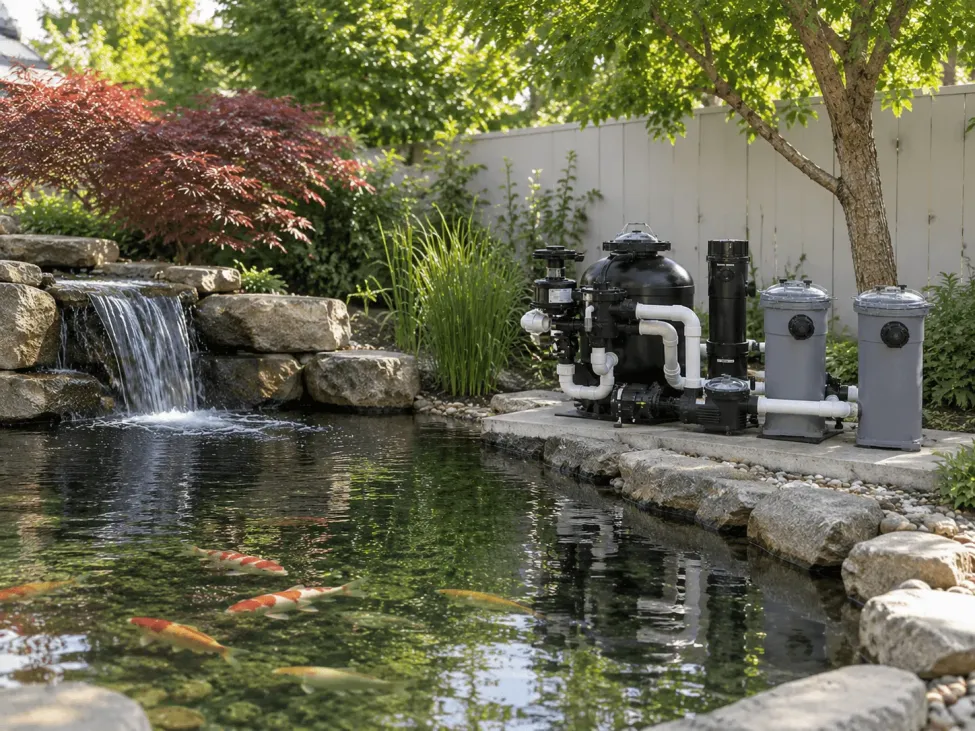
A heavily stocked koi pond needs more than one filter. It needs a chain of equipment where each stage does one job well and protects the stage after it. Koi grow large, eat a lot and produce a steady stream of solid waste and dissolved ammonia. A single all-in-one filter can keep up with a lightly stocked water garden, but once you add more fish, feed heavily in summer or push growth for show koi, that one unit gets overwhelmed.
The result is familiar to most keepers: cloudy or green water, ammonia spikes after feeding, filters that need cleaning every other day and fish that look stressed. A well-designed multi-stage system fixes this by splitting the work into collection, prefiltration, biological filtration and UV clarification.
This guide walks through how each stage works, how they connect, and how to size a system for a high-bioload pond.
Bioload is the total amount of waste your pond has to process. It is driven mostly by how much food goes in each day, not by the number of gallons. Every pellet a koi eats ends up as one of two things: solid waste (feces, uneaten food, mulm) or dissolved ammonia excreted through the gills.
A pond is considered high bioload when any of these apply:
Two processes have to keep up with that load. Mechanical filtration removes solids before they break down and release more ammonia. Biological filtration relies on nitrifying bacteria that convert ammonia to nitrite and then to the far less toxic nitrate. Those bacteria need oxygen, steady flow and a clean surface to live on. When solids clog the biological media, the bacteria lose that surface and water quality falls quickly. That is the core reason for separating the stages.
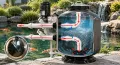
A proven layout for a high-bioload koi pond follows the water from the pond floor back to the return:
The order matters. Each stage takes load off the next one, so the bead filter spends its capacity on biology instead of trapping leaves, and the UV lamp works on clear water instead of water full of particles that block light.
Waste that settles on the pond floor keeps rotting and feeding ammonia back into the water. A bottom drain at the deepest point pulls that debris out continuously, while a skimmer removes floating debris, oils and pollen from the surface before they sink. In larger ponds, two or more drains spread across the floor prevent dead zones where mulm collects. Drains are usually installed during construction, so it pays to plan bottom drains and skimmers before the liner or concrete goes in.
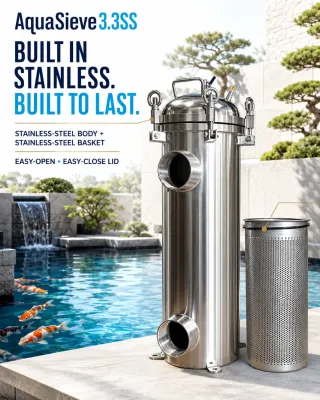
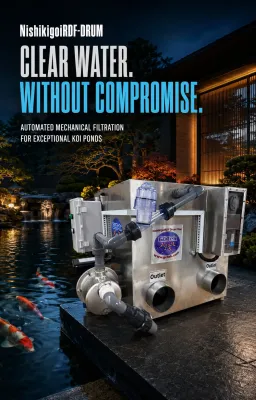
A prefilter is the single biggest upgrade for a heavily stocked pond. It sits between the collection point and the bead filter and removes hair algae, leaves, uneaten food and coarse waste. Without it, the bead filter fills with solids that should never have reached it, which means more frequent backwashing and more water wasted.
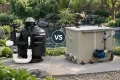
The two common types are:
For most high-bioload ponds, the question is not whether to use a prefilter but which type fits the pond size and how much hands-on cleaning you are willing to do.
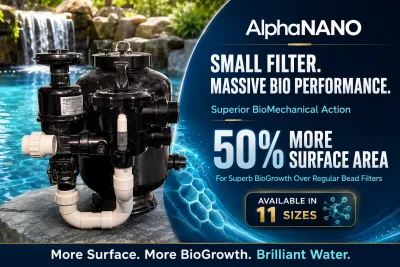
A bead filter does two jobs in one vessel. Water is pushed through a bed of small plastic beads that traps fine particles the prefilter missed, while the huge surface area of those beads gives nitrifying bacteria a place to colonize. That combination of fine mechanical and strong biological filtration in a compact, pressurized unit is why bead filters are a favorite for serious koi keepers.
What makes a bead filter work well under heavy load:
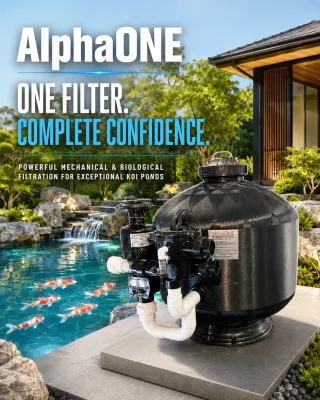
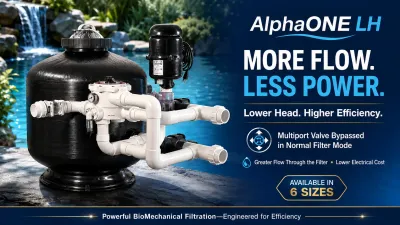
When comparing bead filters, look at whether agitation is built in, how the backwash valve is plumbed, and what fish load the manufacturer rates the unit for. Designs such as the AlphaONE and Aqua Bead filters publish sizing information based on both pond volume and stocking, which is a more reliable starting point than gallons alone.
High-bioload ponds are rich in nutrients, and nutrients feed algae. Free-floating single-cell algae turn water pea-green, and no mechanical filter can catch cells that small. A UV clarifier solves this by exposing water to ultraviolet light, which damages the algae cells so they clump together and can be captured by the filter.
A few points decide how well a UV unit performs:
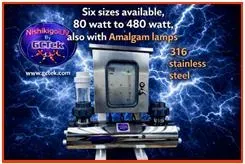
UV clears green water. It does not remove ammonia or nitrite, and it does not replace biological filtration. Larger koi ponds with high flow rates generally need higher-wattage amalgam UV units to keep enough contact time at full flow.
Every stage depends on the pump moving the right amount of water. Many koi keepers aim to turn over the full pond volume roughly once every one to two hours, with heavily stocked ponds sitting toward the faster end. A 6,000-gallon pond at a one-hour turnover needs around 6,000 gallons per hour delivered through the whole system, after friction losses from pipes, valves and height are accounted for.
When planning flow, keep these in mind:
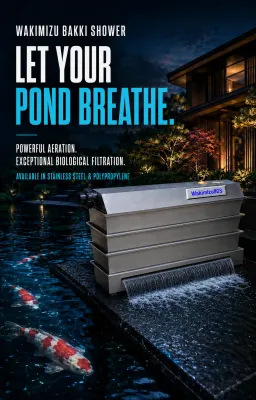
Oxygen is the other half of the equation. Nitrifying bacteria use a large share of the oxygen in a busy pond, and koi demand more as temperatures rise. Aerated bottom drains, air stones and well-placed returns keep levels up, particularly on warm nights when dissolved oxygen is at its lowest.
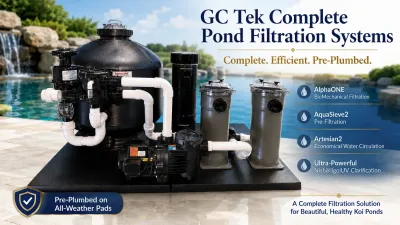
You can assemble a multi-stage setup piece by piece, or start with a matched system where the components are already sized to work together. Both approaches work. The right choice depends on your pond and how much design work you want to take on.
| Complete System | Component by Component | |
|---|---|---|
| Sizing | Pump, filter and UV matched to a rated pond size | You match flow ratings and capacities yourself |
| Setup | Faster, fewer compatibility questions | More planning, more plumbing decisions |
| Flexibility | Less room to mix brands or specs | Full control over each stage |
| Best for | New builds and full filtration upgrades | Upgrading one stage of an existing setup |
Complete pond filter systems are usually rated by pond size, so start from your volume and then move up a size if your pond is heavily stocked or heavily fed. If you are upgrading only one stage, such as adding a prefilter or a stronger UV, check that its rated flow matches the rest of your system first.
A multi-stage system is easier to maintain than an overloaded single filter, but it still needs a routine. During peak feeding season, a typical schedule looks like this:
Mistakes that cause the most trouble in high-bioload ponds:
Worn valve seals, bleeder valves and O-rings are the usual causes of pressure loss and leaks in pressurized systems, so keeping a few replacement parts on hand avoids long downtime in peak season.
A high-bioload koi pond stays healthy when each stage has a clear job: drains and skimmers collect waste, a prefilter removes solids, a bead filter handles fine particles and biology, and a UV unit keeps the water clear. Size every stage for your fish load and feeding, match the flow ratings, and keep oxygen high through the warm months.
Before choosing or upgrading equipment, write down your pond volume, number and size of koi, feeding routine and current equipment. Those details decide sizing more than any single spec, and they make it easier to get accurate advice from the Aqua Bead team or any pond professional.
1. Do I really need a prefilter if I have a bead filter?
In a lightly stocked pond, a bead filter can manage alone. In a high-bioload koi pond, a prefilter removes coarse solids first, so the bead filter needs fewer backwashes and keeps more capacity for biological filtration.
2. Where should the UV clarifier go in the system?
After the bead filter. Clear water lets UV light reach algae cells, so the unit does more work per watt.
3. How do I size a filter for a heavily stocked pond?
Start with pond volume, then adjust upward for fish load and feeding rate. A pond with many large koi fed several times a day needs more capacity than the same volume holding a few small fish. Manufacturer sizing guides usually account for both.
3. Will a UV unit fix high ammonia?
No. UV controls green water caused by free-floating algae. Ammonia is handled by biological filtration and by removing solids before they break down.
4. How often should I backwash a bead filter?
It depends on feeding and stocking. Heavily fed ponds in summer may need backwashing every few days, while the same pond in cooler months may go a week or more. Rising filter pressure is the clearest sign it is due.