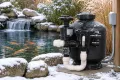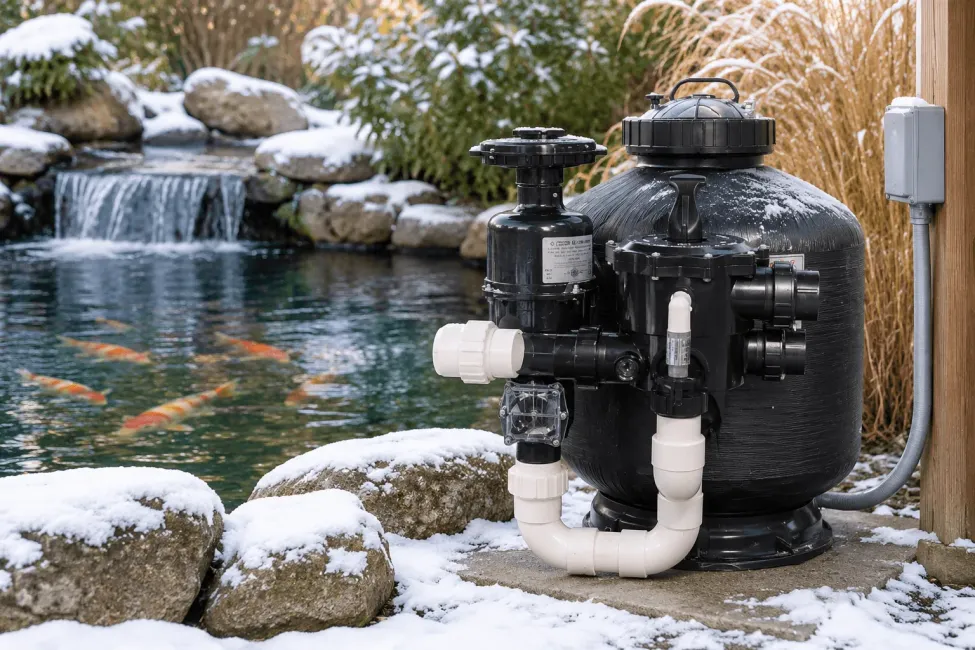
If your pond water stays above about 40°F and your plumbing is protected from freezing, it is generally best to keep your bead filter running throughout winter. Continuous circulation helps maintain water movement and supports the beneficial bacteria living in the filter media, even though their activity slows in colder temperatures. It also helps prevent waste from building up in the system.
However, if your pond freezes over for weeks at a time and your filter or plumbing is exposed above ground, shutting the filter down may be the safer option. In that case, drain the filter housing, valves and exposed pipes completely to prevent ice damage. Keep a small circulation pump or aeration source running, where conditions allow, to maintain some water movement and help prevent the entire pond surface from freezing over. Always consider your local winter temperatures and the setup of your pond before deciding which approach is best.
Use water temperature, not air temperature, to make the call:
| Pond water temperature | What your filter should be doing |
|---|---|
| Above 60°F | Normal operation and backwash schedule |
| 50–60°F | Keep running; backwash less often as fish eat less |
| 40–50°F | Keep running if plumbing is freeze-protected; reduce backwashing to a minimum |
| Below 40°F for weeks | Northern ponds: consider full shutdown and draining |
A bead filter does two jobs: it traps solid waste, and its beads host beneficial bacteria that convert toxic ammonia into safer nitrate. Cold water affects both. The nitrifying bacteria slow down sharply once water drops below about 50°F and become close to dormant in the low 40s. Koi slow down at the same time. They eat little or nothing, so they produce far less ammonia. That balance is why a slowed-down filter can still keep a winter pond healthy. As temperatures continue to fall, the filter may take longer to process waste, and its biological activity becomes less efficient. This is why pond owners should avoid overfeeding koi during colder months and keep an eye on water quality. Even when fish are less active, regular checks of ammonia and nitrite levels can help identify problems before they affect pond health.
The real winter danger is physical, not biological. Water expands about 9% when it freezes. Water left inside a filter housing, multiport valve, or exposed PVC pipe can crack fittings that are rated for pressure but not for ice. If you shut a filter down, it must be drained completely. A half-drained filter is often worse than one left running. It is also important to check exposed plumbing, valves and connections before freezing temperatures arrive. If the filter will remain in operation, make sure water can continue moving through the system and that vulnerable pipes are properly protected. Taking these precautions can help prevent freeze damage and make it easier to bring the filtration system back into service when temperatures rise.
Find your state below, then jump to the section for your zone. If you live in a mountain area, use the colder zone; elevation matters as much as latitude.
| Zone | Example states | Typical winter | Filter approach |
|---|---|---|---|
| 1. Northern cold | MN, WI, MI, ND, SD, ME, VT, NH, upstate NY, MT | Ponds ice over for weeks; lows below 0°F | Shut down and drain, or run only if fully protected |
| 2. Midwest & Plains | OK, KS, MO, NE, IA, IL, IN, OH, PA, NJ, KY | Freeze-thaw cycles, ice storms, big temperature swings | Keep running with freeze protection |
| 3. Southern | TX, GA, the Carolinas, TN, AL, MS, AR, VA | Mild, with occasional hard freezes | Run all winter; have a hard-freeze plan |
| 4. Warm | FL, southern CA, southern AZ, HI, Gulf Coast | Rarely below freezing | Year-round operation |
| 5. Pacific Northwest | WA, OR, northern CA coast | Cool, wet, heavy leaf fall; occasional snap freeze | Run all winter; manage debris and rain |
In the coldest states, most pond owners with an above-ground or exposed bead filter should shut it down for winter to prevent freeze damage. The exception is a filter housed in an insulated or heated filter room with buried plumbing, as these systems can often run year-round with proper protection. Plan your shutdown for when the water temperature drops below about 45°F, usually between late October and mid-November. Complete the process before the first long hard freeze, not after. Drain the filter housing, multiport valve, pump and exposed pipes completely to prevent trapped water from freezing and damaging the equipment.
It is also a good time to inspect fittings, seals and connections for wear before storing the equipment for winter. Proper preparation makes spring startup easier and helps avoid unexpected repair costs.
Keep a hole in the ice. With the filter off, toxic gases from decaying waste can build up under solid ice. Keep an opening using a floating de-icer or a small air pump. Place the air stone in the upper third of the pond, not on the bottom, so you do not mix away the warmer water your koi rest in.
If your system includes an aerated bottom drain such as the Rhino, reduce or reposition the air supply for winter so it does not chill the deepest water.
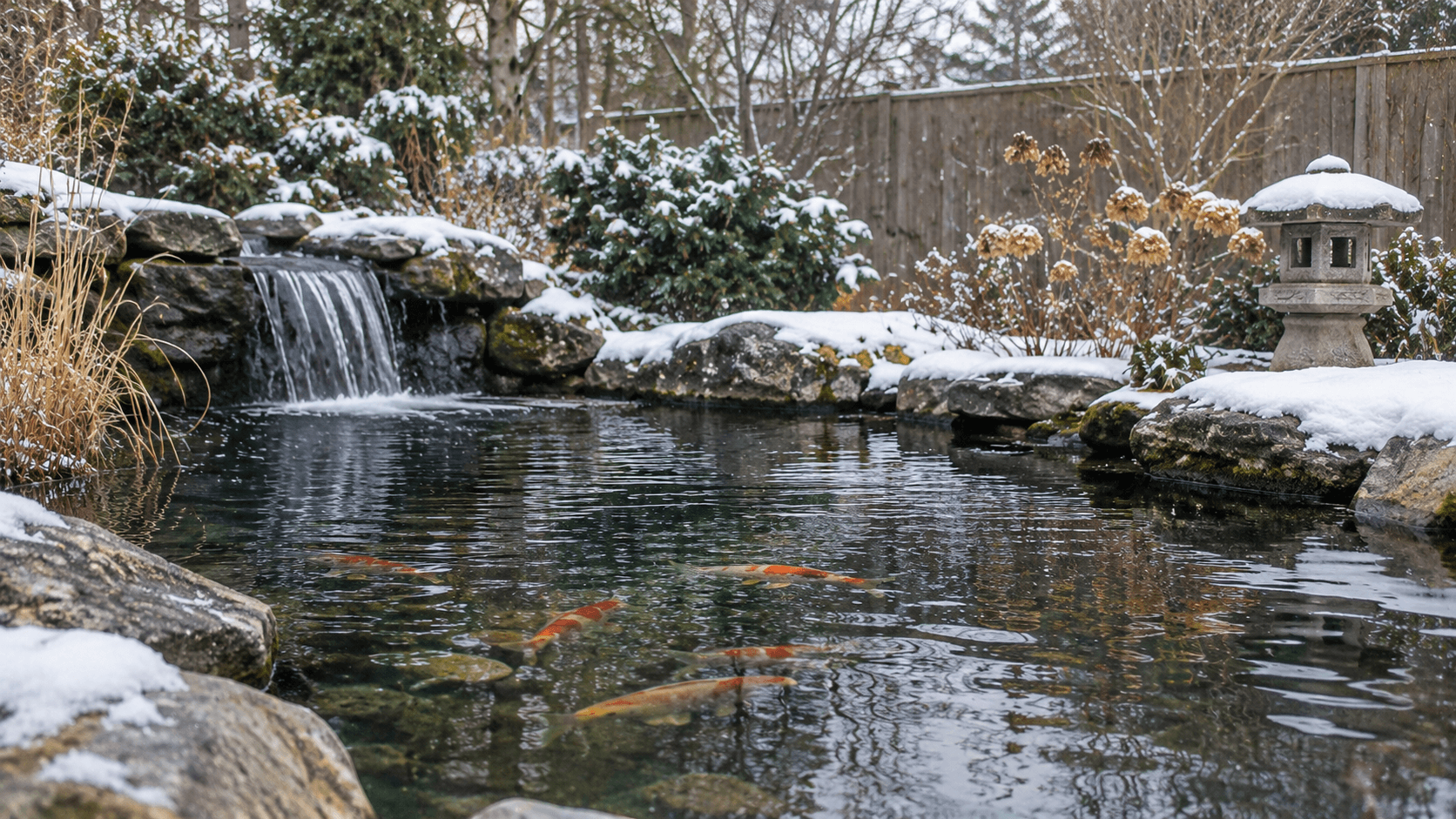
This is our home zone, and it is the trickiest. Winters here often swing between mild spells and sharp freezes, sometimes within the same week. Most ponds do not stay frozen long enough to justify a full shutdown, so the best approach is to keep the bead filter running and protect it from freezing. Moving water is less likely to freeze solid in pipes, but the system is not completely protected from extreme cold. The damage usually happens when the power goes out during an ice storm or when the pump is shut off "just for the night" during a cold snap. Without circulation, water can freeze inside the filter, valves and exposed plumbing, leading to cracked fittings and costly repairs.
Pond owners should regularly check their pumps, electrical connections and exposed pipes during freezing weather. It is also a good idea to have a backup power plan or know how to safely drain the equipment if an extended power outage is expected. These precautions can help protect the filtration system while keeping the pond running through unpredictable winter conditions.
Power outage plan. If an ice storm knocks out power for more than a few hours below 28°F, drain the filter and exposed pipes before they freeze. Restart and refill once power returns.
This is also the zone where an automatic backwash valve earns its keep, because it reduces how often you need to be outside handling valves in freezing weather.
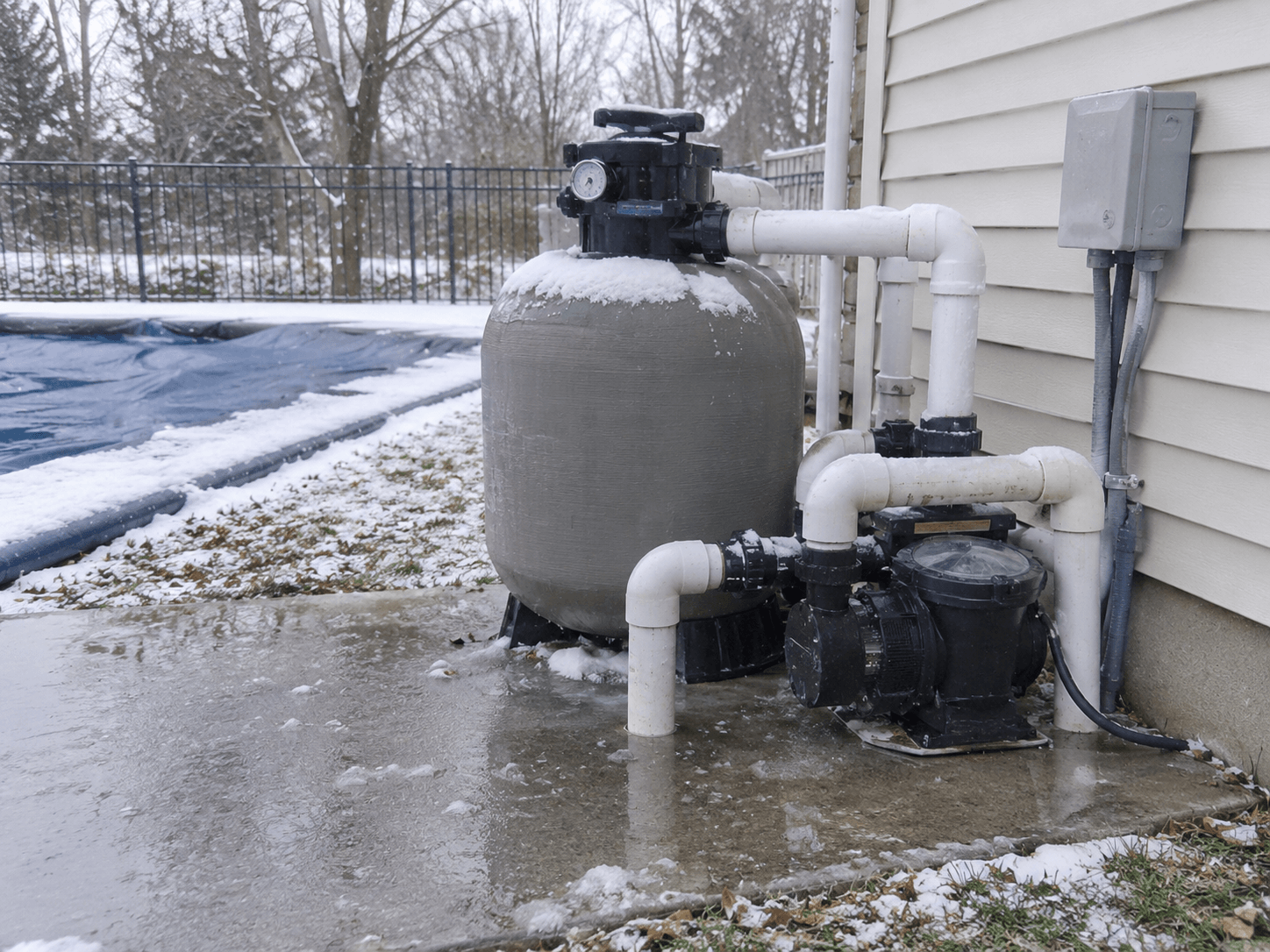
In the South, keep your bead filter running throughout winter in most conditions. Water temperatures rarely stay low for long, koi often continue eating on warmer days, and the beneficial bacteria in the filter need to remain active to support water quality. However, adjust feeding according to water temperature and fish activity, as their digestion slows when the water gets colder. The main risk in this region is an unexpected hard freeze. The February 2021 winter storm in Texas showed how many pond systems in the South have exposed plumbing and no plan for a multi-day freeze. Even if freezing temperatures are uncommon, exposed pipes, valves and filter housings can still be damaged when water freezes inside them.
To prepare, inspect your plumbing before winter, protect exposed pipes with suitable insulation and know how to drain your filter if temperatures are expected to remain below freezing for an extended period. A little preparation can help prevent costly equipment damage while keeping your pond filtration system ready for normal operation.
Because Southern koi often eat through winter, keep your normal backwash routine, adjusted to how much you are feeding.
In warm states, there is usually very little winter preparation needed for pond filtration systems. Your bead filter can continue running year-round, and koi generally remain more active because water temperatures stay relatively mild. Regular feeding and filtration can continue as usual, with adjustments based on actual water temperature and fish activity.
Winter is also a good time for filter maintenance and equipment upgrades because pond work is far more comfortable at 70°F than at 95°F. Pond owners can use this period to inspect pumps, clean pre-filters, check plumbing connections and replace worn components. Taking care of these tasks during the cooler months helps keep the filtration system working properly and prepares the pond for increased activity during spring and summer.
Use the cooler months to:
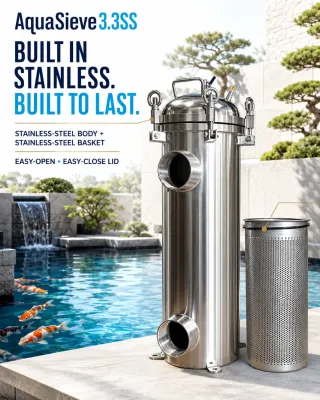
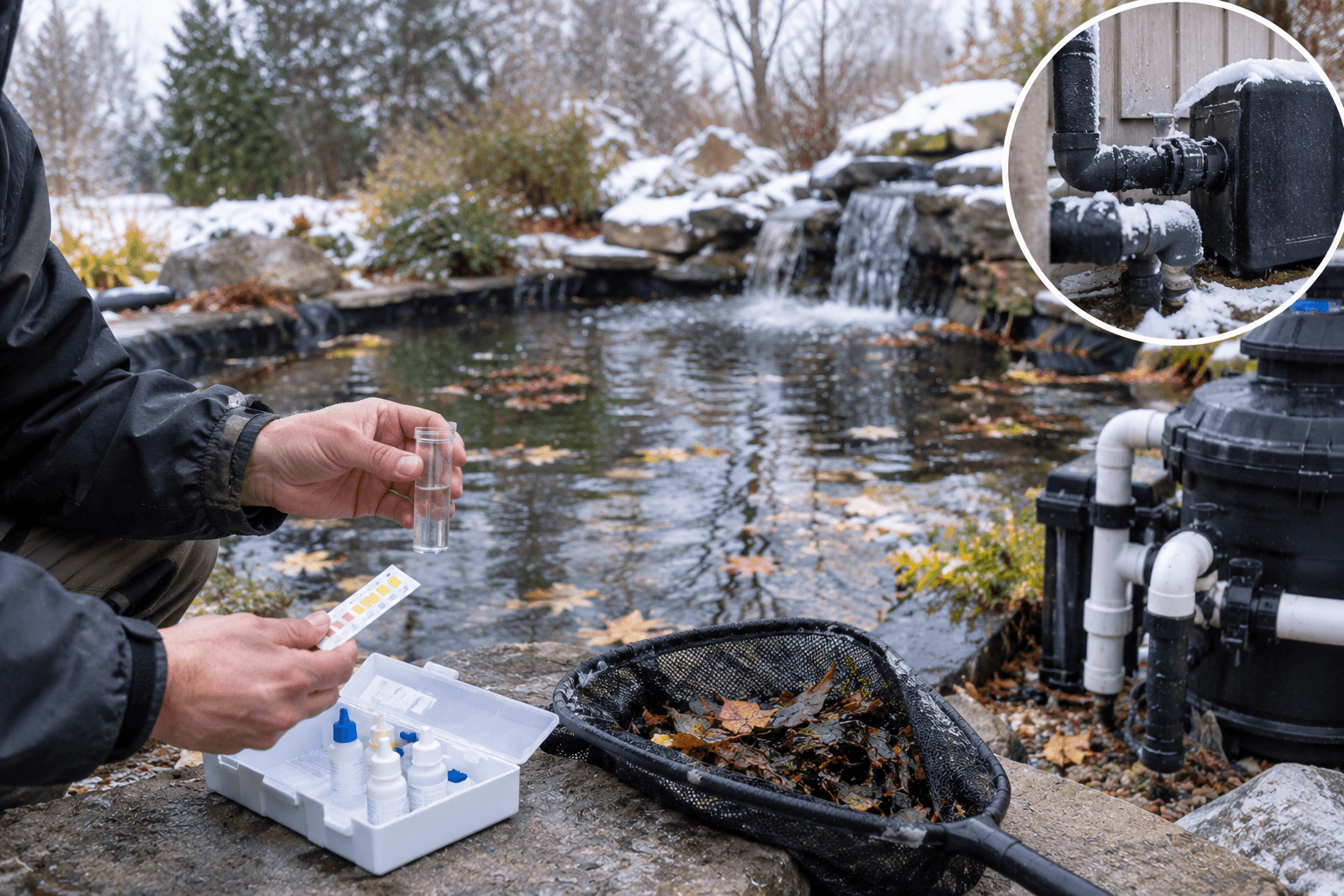
Ponds in the Pacific Northwest rarely freeze for long periods, so keeping the bead filter running throughout winter is generally a good option. However, pond owners in this region need to pay attention to falling leaves, organic debris and frequent rainfall, as these can affect filtration and water quality. Heavy fall leaf drop can clog a bead filter quickly, forcing more frequent backwashing and reducing water flow through the system. An AquaSieve2 pond pre-filter strainer can help catch leaves and larger solids before they reach the bead filter, reducing the amount of debris entering the filtration system. Regularly checking the skimmer, pump basket and pre-filter also helps maintain proper circulation during the wetter months.
Frequent rainfall is another concern in this region. Large amounts of rainwater can dilute pond water and lower its pH and KH levels, affecting water stability. Test your pond water at least once a month throughout winter and monitor any noticeable changes. Removing accumulated leaves and organic matter is equally important because decomposing debris can add unwanted nutrients to the water. Although prolonged freezing is uncommon, occasional cold snaps can still bring temperatures below freezing. During these periods, check exposed pipes, valves and filter connections for signs of freezing. If a hard freeze is expected, follow the Zone 3 hard-freeze checklist above to protect your filtration equipment from potential damage.
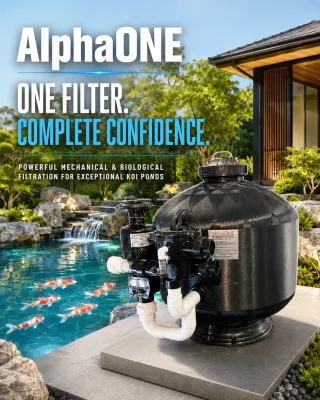
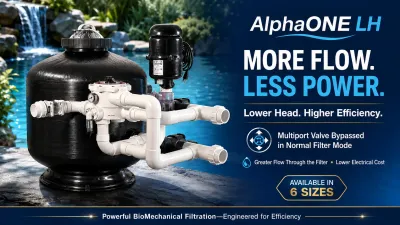
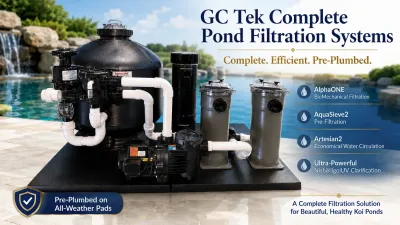
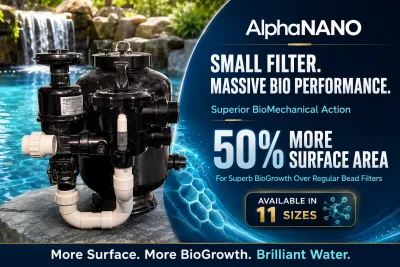
Whatever your zone, winter is the right time to decide whether your current filter can handle next season. If you spent last summer fighting cloudy water, constant backwashing, or a filter that cannot keep up with a growing fish load, a spring upgrade is easier to plan now than in April, when installers and stock get busy. Our roundup of the best koi pond filter options and our koi pond filter system setup guide are good places to start. GC Tek bead filters come with a lifetime warranty and include media agitators as standard. Compare sizes for your pond in our AquaBead Filters and AlphaONE Bead Filters collections, or browse our complete filtration systems for ponds by pond size in gallons.
Looking for pond filters near me? Find a GC Tek dealer in your state, or call us at 405-258-5551.
Yes, in most of the US. If your pond water stays above about 40°F and your plumbing is protected from freezing, a bead filter can run all winter. In the coldest northern states, exposed filters are usually safer shut down and fully drained.
Northern pond owners typically shut down when water stays below about 45°F and long hard freezes are on the way. In the Midwest, South, and Pacific Northwest, most owners keep filters running and protect them from freezing instead.
Much less than in summer. Once water drops below 50°F and feeding stops, every one to three weeks is usually enough. Backwash on a mild afternoon so waste lines drain fully.
Not completely. Beneficial bacteria slow down below about 50°F and go nearly dormant in the low 40s, but a healthy colony recovers in spring as the water warms. Restart slowly and feed lightly at first.
Not always. Southern and Pacific Northwest ponds rarely need one. In colder zones, a de-icer to keep a hole open in the ice is often enough. For more on heating a koi pond in winter, see our heater tips guide.