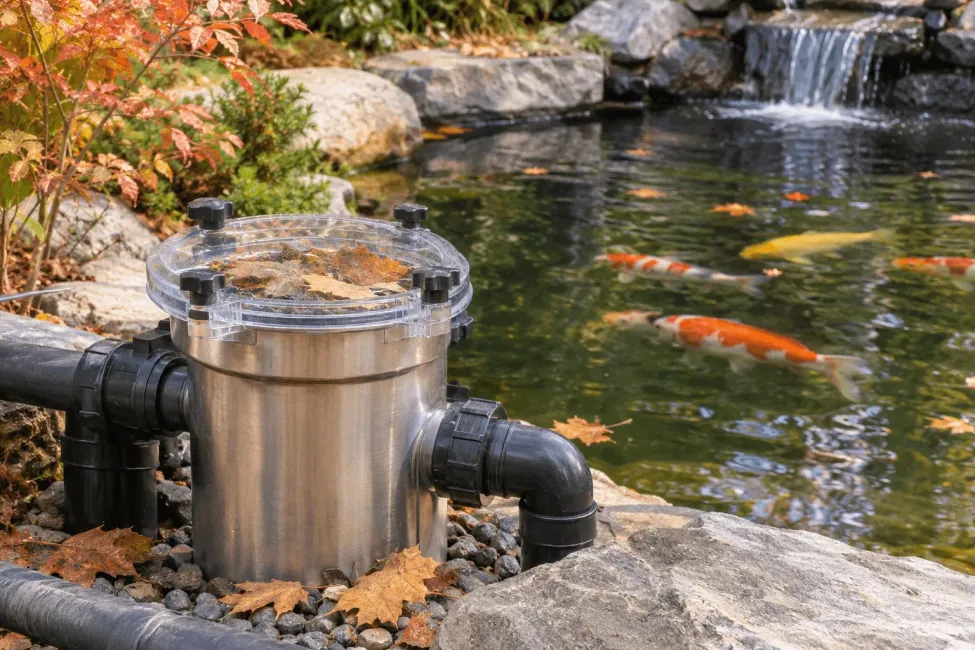
It's late November. Your koi have slowed down, you've cut back on feeding, and the pond finally seems to be taking care of itself. Then you notice it: a layer of brown leaves on the bottom, a pump that sounds like it's working harder, and water that smells a little earthy. This is the most common winter pond problem in America, and it's the easiest one to miss. Leaves that fall now don't float away. They sink, rot and feed every water-quality issue you'll fight through winter and into spring. The good news: this problem has a clear cause and a clear fix. This guide walks you through spotting it, understanding why it gets worse as the water cools, and stopping it for good.
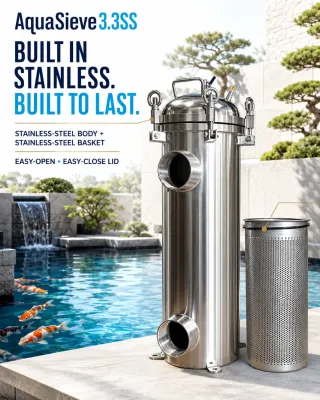
Quick answer: To stop fall leaves from fouling your koi pond, catch them before they reach your pump and filter. A stainless steel prefilter like the AquaSieve SS traps leaves and debris in a basket you rinse in minutes, protecting your pump, your bead filter and your fish all winter.
Ready to stop the leaves? Browse our full range of pond prefilters.
Shop pond prefiltersStep 1: Diagnose it. 6 signs your pond has a debris problem
Walk out to your pond and check for these. If you see two or more, debris is already affecting your water.
| What you notice | What's causing it | What it leads to if ignored |
|---|---|---|
| Brown leaves or dark sludge on the bottom | Leaves sinking and decaying | Ammonia spikes and low oxygen |
| Pump sounds strained or flow from the return is weaker | Leaves and twigs blocking the intake | Burned-out pump, poor circulation |
| You're backwashing your bead filter far more often | Large solids packing into the media | Less biological filtration when you need it most |
| Tea-colored or cloudy water | Tannins and fine particles from rotting leaves | Poor visibility, stressed fish |
| Earthy or rotten-egg smell | Decay without enough oxygen | Gases that are harmful to koi, especially under ice |
| Koi hanging near the surface or the waterfall | Oxygen being used up by decay | Stress, disease, or worse |
Every one of these traces back to the same root cause: organic debris getting into the system and staying there.
Step 2: Understand why it gets worse as the water cools
In summer, a healthy pond can absorb a few leaves. In late fall and winter, it can't. Two things slow down at the same time: your fish and the bacteria that clean your water.
| Water temperature | What your koi are doing | What your filter bacteria are doing | Debris risk |
|---|---|---|---|
| 60°F and above | Active, eating, immune system strong | Working at full speed | Low |
| 50–60°F | Slowing down, eating less | Slowing noticeably | Rising |
| 40–50°F | Barely eating, resting near the bottom | Working at a fraction of summer capacity | High |
| Below 40°F | Dormant, immune system very slow | Nearly stopped | Highest, waste just accumulates |
Temperatures are general guidelines; every pond is a little different.
That's the trap. The leaves arrive exactly when your pond is least able to break them down, and your koi are least able to fight off the stress. Whatever falls in now tends to sit there until spring, and when the water finally warms, all that stored waste fuels algae blooms and cloudy water.
The smartest fix isn't cleaning up the mess later. It's keeping debris from getting into the system in the first place.
Step 3: Compare your options for keeping debris out
Most pond owners try one of these. Here's how they stack up for a koi pond in winter.
| Option | What it does well | Where it falls short |
|---|---|---|
| Hand net / pond rake | Cheap, removes visible leaves | Daily chore, misses what's already sunk or in the plumbing |
| Pond netting over the water | Catches leaves before they land | Sags under wet leaves and snow, blocks the view, wind still blows debris under |
| Skimmer | Pulls floating debris from the surface | Only catches what floats; its basket can still let smaller debris through to the pump |
| Inline prefilter (AquaSieve SS) | Traps leaves, twigs and solids before the pump and filter, every hour of every day | Needs a basket rinse during heavy leaf drop (a couple of minutes) |
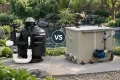
Netting and skimmers are useful, but they work on the surface. A prefilter protects the part of your pond that actually keeps fish alive: the pump and the filtration system. For the best results, many koi keepers pair a skimmer or bottom drain with a prefilter.
Step 4: Solve it with the AquaSieve SS stainless steel prefilter
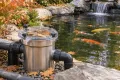
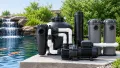
The AquaSieve SS sits in your plumbing ahead of the pump and main filter. Pond water flows through a stainless steel basket that traps leaves, twigs, fish waste and other solids. Your pump and bead filter only ever see cleaner water.
Here's how it answers each problem from Step 1:
| Your problem | How the AquaSieve SS solves it |
|---|---|
| Leaves and sludge building up | Stainless steel basket with 1/8" holes catches large debris and smaller particles before they cycle back into the pond |
| Strained or clogged pump | Stops blockages at the source, extending pump life |
| Constant backwashing | Big solids never reach the bead filter, so its media stays clear and its bacteria focus on dissolved waste |
| Hard-to-start pump after a cold night | Built-in reservoir helps prime difficult pumps for steady flow |
| Cheap gear cracking in the cold | Stainless steel housing resists corrosion and holds up to heavy use, season after season |
| No time for daily pond chores | Easy-open lid: lift the basket, rinse, drop it back in. One customer says it takes a couple of minutes |
It connects with standard PVC fittings through threaded female inlet and outlet ports and works with most pond pumps and filter setups.
Shop by category
Everything you need to keep debris out of your pond this winter, in one place.
| Category | What you'll find | Link |
|---|---|---|
| Pond PreFilters | All GC Tek prefilters for catching leaves and debris before your pump and filter | Shop now |
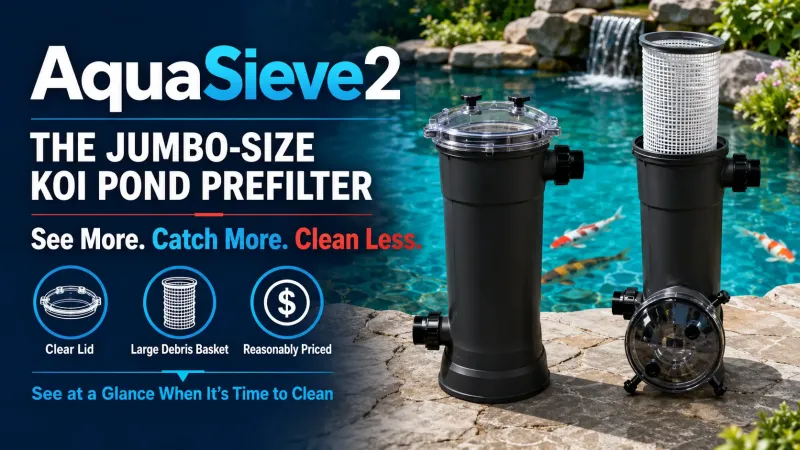
| AquaSieve2 and SS Prefilters | AquaSieve SS stainless models in 2", 3" and 4" sizes, plus the budget-friendly AquaSieve2 | Shop now |
| MultiCyclone 50 | An alternative prefiltration option for separating solids | Shop now |
| Bottom Drains & Skimmers | Rhino bottom drains and Savio skimmers to pull debris toward your prefilter | Shop now |
| AquaSieve Replacement Parts | Genuine parts to keep your existing AquaSieve running | Shop now |
Not sure which size fits? Call GC Tek at 405-258-5551.
Step 5: Debris-proof your pond this weekend
Follow this order to go into December with a cleaner, safer pond.
- Clear what's already in. Net out floating leaves and gently remove the sludge layer from the bottom. Don't stir up the whole pond at once; work in sections.
- Check your pump intake. Clear leaves, twigs and seed pods. If flow is still weak, the pump may need a cleaning.
- Install the prefilter before the pump. Plumb the AquaSieve SS in line so water reaches the basket first, then the pump, then your bead filter.
- Backwash your bead filter once. Start the season with clean media so it's only handling fresh, dissolved waste.
- Adjust feeding to water temperature. Feed lightly and less often as water drops, and stop when it's consistently cold. Uneaten food is just more waste.
- Set a basket check routine. Every few days during heavy leaf drop, then weekly once the trees are bare.
- Plan for ice if you're up north. Keep an opening in any ice so gases can escape, and never smash ice with force, which can stress fish.
Where you live changes the plan
Winter pond care in Minnesota looks nothing like winter pond care in Texas. Find your region:
| Region | Your pond right now | Your priority |
|---|---|---|
| South and Sun Belt (TX, OK, FL, GA, AZ) | Pumps and filters run all winter; oaks and pecans keep dropping leaves into December | Protect a year-round system from months of steady debris |
| West Coast (CA, OR, WA) | Mild temperatures, but rain and wind carry debris into ponds | Catch storm debris before it reaches the bead filter |
| Midwest and Mid-Atlantic | Final leaves coming down; many systems run until hard freezes | Get the last leaf load out before ice and the deep slowdown |
| North and Northeast | Systems shutting down or running at low flow under ice | Install now while you can still work outside, so spring start-up begins clean |
Wherever you are, the goal is the same: enter the coldest months with as little rotting material in your pond as possible.
Troubleshooting: still seeing problems?
| If you notice... | Try this |
|---|---|
| Flow drops between cleanings | Leaf drop is heavy; check and rinse the basket more often until the trees are bare |
| Water is still cloudy | Fine particles may be passing through; give your bead filter time, and consider adding UV for green water in spring |
| Pump still struggles to start | Make sure the prefilter reservoir is full of water and all fittings are tight |
| Sludge keeps returning on the bottom | Debris is settling before it reaches the intake; pair the prefilter with a bottom drain or skimmer |
| Koi still gasping near the surface | Check oxygen right away; add aeration and test ammonia. This may need more than debris control |
If something doesn't add up, call our team at 405-258-5551. We're happy to talk through your setup.
Solve it now, enjoy it in spring
The leaves falling this week decide what your pond looks like in April. Stop them at the source, and you protect your pump, your filter and your koi all winter long. Shop the AquaSieve SS prefilter Or call GC Tek at 405-258-5551 (toll free 866-712-7007) for help choosing the right size. Prefer to buy locally? Find an authorized dealer near you.
Shopping for a koi keeper this holiday season? A prefilter is the practical gift they'll use every single day. Subscribe to our Insider Sales Promotions to hear about seasonal offers first.